Have you ever repaired your own smartphone or tablet? I have never repaired my own devices, but I did have the opportunity to take apart an iPad at an event. The photo shows that experience. It was surprisingly difficult—it required special tools, and I realized firsthand that repairing a device would be nearly impossible without some kind of assistance. The concept of the ‘Right to Repair’ aims to remove various institutional barriers to repair, making it easier for people to fix their devices without the manufacturer’s control.
To explain this in slightly more technical terms, from the perspective of the circular economy, there is growing concern about business practices that encourage the frequent replacement of electronic devices and other products. These practices are rooted in product design, contracts, and the intellectual property rights held by manufacturers. In response, initiatives promoting the longer-term use of electronic devices through the ‘Right to Repair’ are gaining momentum in the United States and Europe.
While there is no legal definition of the ‘Right to Repair,’ researchers define it as a form of user empowerment—specifically, “the capacity to give back to the users the right to decide what to do with their products when they fail and before they have to dispose of them.” However, the relevant legal policies are wide-ranging; the U.S. and Europe are imposing restrictions on business practices, product design, contracts, and intellectual property rights to ensure the reparability of products.
As for Japan’s approach, given the wide range of issues involved, I believe we need to consider cross-sectoral legal policies. More specifically, I believe the fundamental issue is how to take into account the extrinsic value of the ‘Right to Repair’ within existing legal frameworks. We need to examine how to internalize the ‘Right to Repair’ across various sectors—and, in particular, how to achieve that internalization.
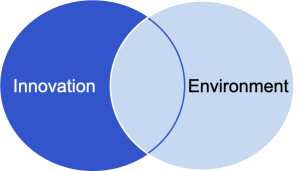
This may sound complicated, but to illustrate it very simply: promoting innovation and protecting the environment can sometimes conflict. Expressed in legal terms, this becomes the challenge of how to incorporate the ‘Right to Repair’ movement into intellectual property law. It is from this perspective that I am advancing this project.
This project has been funded since fiscal year 2022 by the Asahi Glass Foundation’s Research Grant for Sustainable Future (Proposed Research) in the Humanity and Social Sciences, and since fiscal year 2025 by the Environment Research and Technology Development Fund (JPMEERF20251RB2) of the Environmental Restoration and Conservation Agency provided by Ministry of the Environment of Japan.